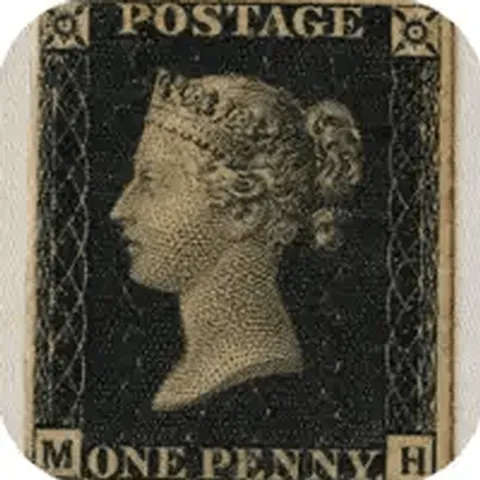
The Penny Black is the most famous stamp in the world — the first adhesive postage stamp ever issued, on 1 May 1840. Which is exactly why we should start with the unfamous truth: about 68.8 million were printed and roughly 1.3 million survive. The Penny Black is a common stamp. A typical used example is worth £15–£40; a good one £40–£150; a genuinely fine one a few hundred pounds. Real money exists — mint examples run four to five figures, and exceptional pieces have passed £100,000 — but it belongs to specific, checkable features. Here are the five checks, in the order a dealer would make them.
1. Is it actually a Penny Black?
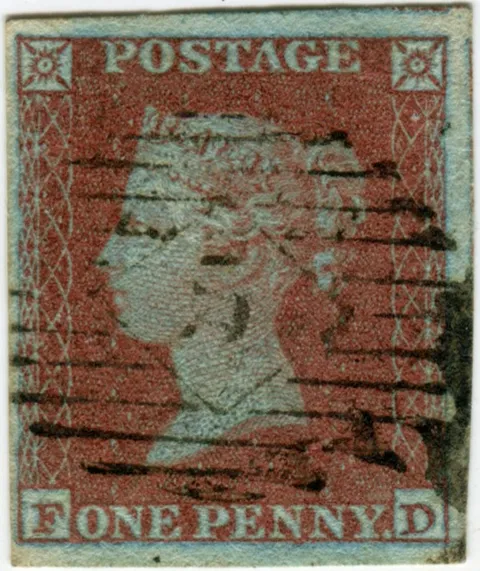
Colour first. The same Queen Victoria design was reprinted from 1841 onward as the Penny Red — deliberately, because red ink took a harder-to-remove black cancel. The Penny Red was printed in the tens of billions and most are worth pennies. Black stamp: continue. Red or red-brown stamp: you almost certainly have the successor, and our Penny Red value checks will place it for you.
Also glance at the back and edges: printed reproductions and souvenirs exist in large numbers. Genuine Penny Blacks are printed from engraved plates on unwatermarked-looking wove paper with a small crown watermark, and they were never perforated — every genuine example was cut from the sheet by hand.
2. Margins — the single biggest price lever
Because the stamps were cut apart with scissors, the space around the printed design varies wildly. The market pays for four clear, even margins. A stamp with the design cut into on any side sits at the bottom of every price range; a stamp with four generous margins can be worth ten times as much in the same condition. This one visual check explains most of the spread between a £20 Penny Black and a £300 one.
3. The plate — the £-five-figure lottery ticket
Eleven printing plates produced the Penny Black. Specialists can identify the plate from the check letters in the bottom corners and tiny engraving characteristics — and plate matters enormously: Plate 11 had a print run of only about 168,000 (against tens of millions for common plates), so the same-looking stamp from Plate 11 is a genuine rarity. Plating is expert work; if you have a promising stamp, this is a reason to get it looked at, not a reason to guess.
4. The cancellation
Penny Blacks were cancelled with a Maltese Cross handstamp, normally in red. A black Maltese Cross is scarcer and worth more; unusual colours and especially clear, well-struck crosses add a premium. A stamp still on its original 1840 envelope — above all anything used in the first week of May 1840 — moves into serious collector territory. Never soak a classic stamp off its cover to “tidy it up.”
5. Mint or used — and the gum
The vast majority of survivors are used. An unused Penny Black with original gum is a different market entirely: Stanley Gibbons’ guide pricing puts fine mint examples in the five figures, with the range depending on plate and freshness. If you believe yours is mint, handle it as little as possible and get a certificate from a recognised expert body (RPSL or BPA) — at this level, the certificate is the value.
Three mistakes that destroy Penny Black value
Before you do anything else with the stamp, know the three most common ways owners accidentally cheapen a good one:
- Soaking it off its envelope. An 1840 letter with its stamp attached is postal history; a soaked-off stamp is just a stamp. The envelope can be the valuable part.
- “Cleaning” it. Erasers, water, and sunlight all remove value. Faded or cleaned stamps drop to the bottom tier no matter how rare the plate.
- Hinging or taping it into a new album. If it’s mint, any new mount damages the original gum — and the gum is a large share of a mint stamp’s price. Store it in an inert stockbook or leave it exactly where it is until it’s been assessed.
None of these are hypothetical: dealers see well-meaning damage weekly, and it is the difference between the £40 tier and the £150 tier on otherwise identical stamps.
The honest summary
| What you likely have | Realistic range |
|---|---|
| Used, faults or tight margins | £15 – £40 |
| Used, sound with decent margins | £40 – £150 |
| Used, four fine even margins | £250 – £400 |
| Mint with original gum | four to five figures — get it expertised |
| Plate 11, first-day covers, superb pieces | specialist territory, £5,000+ |
Checking the first two or three features takes one good look at the stamp — or one photo. Identify it, see which tier it honestly falls in, and only then decide whether it’s worth the cost of an expert certificate.
The genuine articles
So you can compare against the real thing — these are genuine, public-domain reference images, not illustrations: